
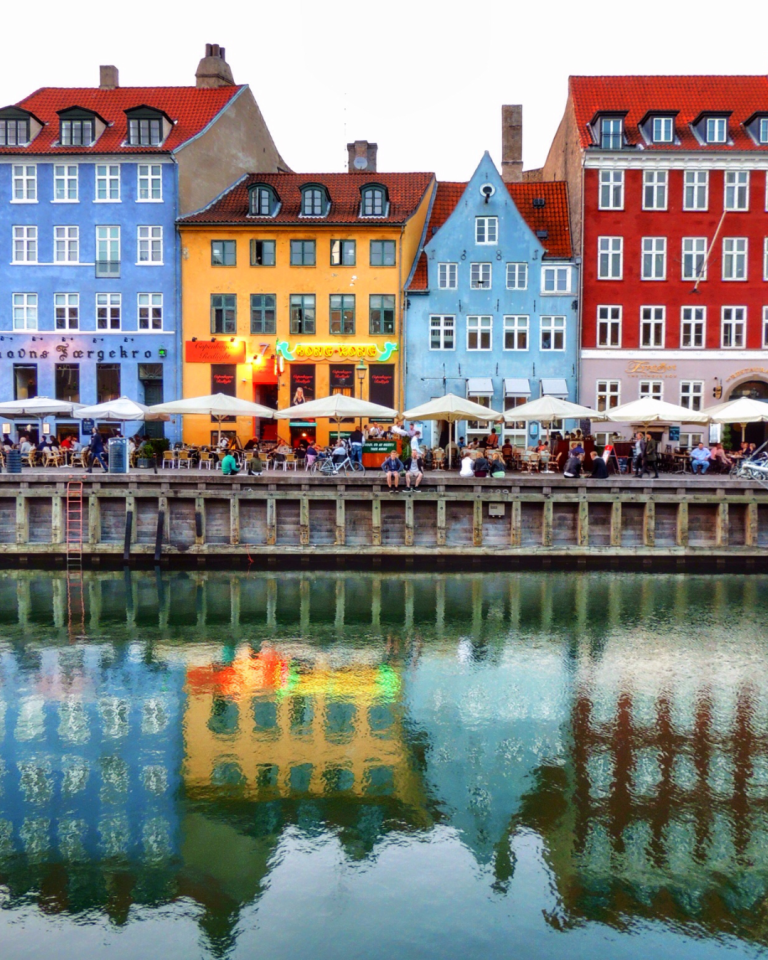
Living in Copenhagen: Cost of Living, Housing and Everyday Life
Copenhagen is one of Europe’s most liveable capitals and home to many international employers in life sciences, finance, tech and green energy. That makes it a common destination for employees on assignment and teams brought in for projects.
This guide is for anyone moving to Copenhagen for work, and for the companies planning their stay. It covers what living in Copenhagen is like, what it costs, which areas to consider, how to find a place to live and what to arrange when you arrive.
Kassoe Housing is based just north of the city in Kgs. Lyngby, and arranging furnished homes in the Copenhagen area for companies and their employees is a core part of our work.
What Is It Like Living in Copenhagen?
Everyday life in Copenhagen is relaxed and well organised. Distances are short, the harbour is clean enough to swim in during summer, and parks and water are never far away.
The bike is the default way to get around. Cycle lanes run through the whole city, and people cycle to work in all seasons.
Work culture follows the Danish model: informal, flat and with a clear line between work and free time. English is widely spoken, both at work and in shops and restaurants.
The trade-offs are real. Prices are high, winter days are short and grey, and the competition for rental flats can be frustrating in your first months.
Cost of Living in Copenhagen: Rent, Bills, Food and Transport
Rent is by far the biggest expense in Copenhagen. Here is an overview of typical monthly costs at the time of writing.
Rent (city centre, per month)
According to the City of Copenhagen:
- Room in a shared flat: DKK 4,000 to 6,000
- Studio or small apartment (1 to 2 rooms): DKK 8,000 to 10,000
- Apartment (2 to 3 rooms): DKK 13,000 to 15,000
- Larger apartment (4 to 6 rooms): from DKK 16,000
Other costs
Based on crowdsourced data from Numbeo (September 2026):
- Monthly public transport pass: around DKK 780
- Basic utilities for a mid-sized apartment: around DKK 1,250 a month
- Mobile phone plan: around DKK 75 a month
- Gym membership: around DKK 415 a month
- Cappuccino: around DKK 46
- Meal at an inexpensive restaurant: around DKK 150
Prices vary with area, apartment size and season, so use these figures as a benchmark rather than a budget.
Where to Live in Copenhagen
The right area depends on where you work, your budget and how you like to live. A few areas that often suit people relocating for work:
- Vesterbro. Central, lively, lots of cafés and restaurants.
- Frederiksberg. Green and residential, technically its own municipality.
- Østerbro. Quieter, popular with families, close to large parks.
- Nørrebro. Diverse, busy and full of character.
- Ørestad and Amager. Newer buildings, on the metro line and close to the airport.
- Nordhavn. A new harbour district with modern apartments.
It is also worth looking beyond the city itself. The City of Copenhagen recommends widening your search to Greater Copenhagen, where rents are often lower and train connections are good.
How to Find a Place to Live in Copenhagen
Finding a rental home in Copenhagen takes time and patience. Demand is high, good flats disappear quickly and many are let unfurnished.
The City of Copenhagen’s own advice covers the essentials:
- Make sure you can register your CPR at the address
- Widen your search to Greater Copenhagen
- Use your network
- Watch out for scams
- Learn your rights under the Danish Rental Act
If you are arriving for work and need a home from day one, a furnished apartment is often the easiest place to start. It gives you time to get to know the city before committing to a long lease.
Getting Around Copenhagen
Copenhagen is easy to get around without a car. Most people combine cycling with the metro, S-trains and buses.
- Bike. The fastest option for most journeys.
- Metro. Runs 24 hours a day and connects the centre with the airport.
- S-trains. Link the city with the suburbs and Greater Copenhagen.
- Rejsekort. The travel card used across public transport.
When choosing where to live, look at rent and commute together. Living a few stops further out often gives you more space for the same money.
A Furnished Home for a Work Relocation
For people moving to Copenhagen for work, the first months are often the hardest to organise. You need a home straight away, often without having seen the city, and a standard lease brings high move-in costs and an unfurnished flat.
Kassoe Housing arranges fully furnished accommodation in and around Copenhagen for companies and their employees. Utilities, wifi and cleaning can be gathered into one bill, lease terms are flexible, and our Danish team is on hand throughout the stay.
Read more about what we offer, or request accommodation and we will come back with a proposal that fits your needs. For teams or recurring requirements, you can also make a tender request.
FAQ
How much does it cost to live in Copenhagen?
Rent is the biggest cost. According to Numbeo (September 2026), a one-bedroom apartment costs around DKK 13,100 a month in the city centre and DKK 9,550 outside it. A three-bedroom apartment costs around DKK 21,800 in the centre and DKK 15,350 further out.
Is it hard to find an apartment in Copenhagen?
Yes, it can be. Demand is high, many flats are unfurnished and landlords can ask for up to three months’ deposit plus three months’ prepaid rent. Widening your search to Greater Copenhagen helps, and many people moving for work start in furnished accommodation.
What is the best area to live in Copenhagen?
It depends on your work, budget and lifestyle. Vesterbro and Nørrebro are central and lively, Frederiksberg and Østerbro are greener and quieter, and Ørestad offers newer buildings close to the airport. Commute time matters, so compare rent and transport together.
Do you need a car in Copenhagen?
No. Most people get around by bike, metro, S-train and bus. The metro runs 24 hours a day and connects the city centre with the airport. A car is mainly useful if you live or work outside the well-connected areas.